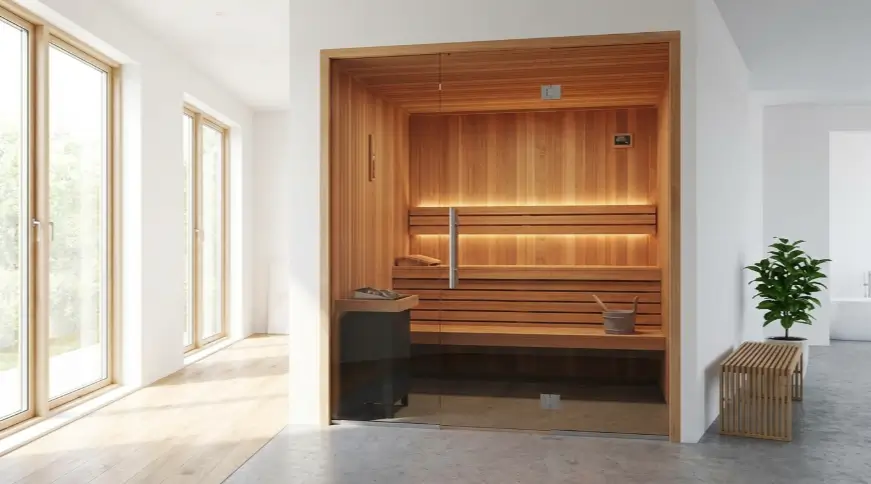
Winter is when an indoor sauna earns its keep: shorter days push more people toward a consistent evening routine, the temperature contrast between a hot cabin and a cool house feels more satisfying, and because the unit sits inside a heated home, it isn’t losing efficiency to freezing outdoor air the way a backyard sauna does. For households already considering one, winter is also when usage tends to become a habit rather than an occasional novelty.
Why does sauna use pick up so much in the colder months?
Part of it is simple contrast. Stepping from a 170°F cabin into a cooler house feels more dramatic in January than in July, when the outside air is already warm and the temperature swing is smaller. Part of it is routine. Shorter daylight hours push more people toward structured indoor evening habits, and a sauna session is an easy one to build a week around, especially paired with something like reading or unwinding before bed. Owners of indoor units consistently report using them more often between November and March than in the warmer months.
Does an indoor cabin actually heat up faster in winter?
Slightly, and for a specific reason. A heated home in winter keeps the room around the sauna at a fairly stable 65°F to 72°F, which is a manageable starting point for the heater to work from. In summer, especially in homes without strong air conditioning, the starting room temperature can be higher and more humid, which paradoxically makes the space feel stuffier before the heater even reaches its target range. This is one of the quieter advantages of an indoor installation over an outdoor one: it isn’t at the mercy of outdoor seasonal swings the way a backyard cabin is, which can see winter heat-up times stretch noticeably longer in freezing climates.
Is it safe to sauna in winter, and does it matter that you’re staying indoors afterward?
Because an indoor cabin opens directly into a normal-temperature room rather than outdoor cold, most users experience a gentler transition than the classic Finnish practice of stepping from a hot sauna into snow or cold water. That’s not a downside, just a different experience. Research on Finnish sauna practices, which often does involve cold exposure afterward, has found associations between frequent sauna bathing and lower cardiovascular mortality, but an indoor setup without a cold plunge afterward still delivers the core heat exposure that most of the research is actually measuring.
Does winter sauna use help with mood or energy during darker months?
Many users report better sleep and a steadier routine when sessions are built into winter evenings, and there’s a reasonable physiological basis for part of that: the drop in core body temperature after a warm session can support the kind of temperature change that helps trigger sleep onset. This is different from a specific clinical claim about seasonal mood, and the evidence here should be read as general wellness association rather than treatment for any diagnosed condition.
If winter is when your household is most likely to actually use a sauna consistently, it’s worth choosing a model built for that pattern rather than one sized around occasional summer use. You can browse indoor cabins built for regular winter routines at SweatDecks, where heater recovery time and insulation specs are listed alongside cabin size.
See also: Balancing Technology and Life
What changes about heater performance once outdoor temperatures drop sharply?
Even indoors, an unusually cold snap can affect performance slightly if the sauna room is near an exterior wall or above an unheated garage, since the ambient temperature the heater starts from is lower than in the rest of the house. Most modern indoor cabins are built with enough insulation in their own walls that this effect is minor, typically adding a few extra minutes to reach target temperature rather than materially raising the cost. Placing the cabin against an interior wall rather than an exterior one, when the room layout allows it, avoids most of this altogether and is worth requesting during installation planning if your home has a particularly cold corner.
One thing that does matter more in deep winter is exhaust fan performance, since cold, dry outdoor air pulled in for ventilation holds less moisture than summer air, which can make the room feel drier and heat up slightly faster after a session ends. This isn’t a problem so much as a seasonal quirk worth knowing about if you notice your sauna room behaving a little differently in January than it did in August.
Does running an indoor sauna cost more in winter than summer?
Not by much. Because the cabin is inside a conditioned home, it isn’t exposed to the wide temperature swings an outdoor sauna deals with across seasons. Any small increase from a slightly cooler starting room in deep winter is usually offset by the fact that the house itself is already being heated, unlike an unheated garage or outbuilding that a sauna might otherwise share space with. Most owners report their monthly running cost stays within a fairly narrow band year-round, which is one more reason an indoor cabin ends up being the more predictable choice for winter-heavy use.
A large Finnish cohort study found sauna bathing associated with lower rates of fatal cardiovascular events, and a separate cohort study specifically looking at blood pressure and sauna frequency in middle-aged and older Finnish adults reported similar associations. Both studies come from populations with heavy winter sauna use, which is part of why winter is often treated as the season the research speaks to most directly.
Frequently Asked Questions
Why do more people use a sauna in winter than summer?
Cold weather makes the temperature contrast of a sauna session feel more dramatic and satisfying, and shorter, darker days push more people toward indoor wellness routines. An indoor cabin also heats faster and holds temperature more efficiently in winter than an outdoor unit fighting freezing air.
Does an indoor sauna heat up faster in winter than in summer?
Yes, slightly, because a heated home in winter is already closer to a comfortable ambient starting point for the room, while in summer the sauna is working against a warmer, often more humid starting air temperature that can make the space feel stuffy before the heater even reaches target.
Is it safe to go from a hot sauna into cold winter air?
Because an indoor sauna sits inside the home, most users step from the cabin into a normal room temperature rather than outdoor cold, which avoids the sharper cardiovascular stress of a hot-to-freezing transition that outdoor sauna users sometimes seek out deliberately.
Does sauna use help with winter mood or seasonal low energy?
Some users report better sleep and a more consistent routine when sauna sessions are built into darker winter evenings, though this is based on reported experience and general wellness research rather than a specific clinical claim about mood disorders.
Is an indoor sauna cheaper to run in winter than in summer?
Running costs are fairly stable year-round for an indoor unit, since it isn’t exposed to outdoor temperature swings the way a backyard sauna is. Any small winter increase from a colder starting room is usually offset by the home’s own heating already keeping the space warmer than an unheated outbuilding.
References
- Effects of heat and cold on health, with special reference to Finnish sauna bathing, American Journal of Physiology – Regulatory, Integrative and Comparative Physiology, 2018
- Association between sauna bathing and fatal cardiovascular and all-cause mortality events, JAMA Internal Medicine, 2015
- The Interplay between Systolic Blood Pressure, Sauna Bathing, and Cardiovascular Mortality in Middle-Aged and Older Finnish Men: A Cohort Study, The Journal of Nutrition, Health & Aging, 2023
- Saunas and your health, Harvard Health Publishing
By Owen Castellan